Friday, May 15, 2015

Reflections on an Unforgettable Journey


I want to live an intentional life.  On purpose. With purpose.

My husband and I had so many reasons why we wanted to uproot our lives and bring our two boys to live in the Dominican Republic. As our time here comes to a close, I have been reflecting on our purpose here and how amazing it was to see all of our goals accomplished.

First, the mission of Fulbright is cultural exchange and community immersion through personal and professional relationships.  As a Fulbright student, I am proud to say that we represented our country abroad and we learned more about the Dominican Republic. We had the chance to meet and share our lives with so many people: through work, the kids’ school/daycare, soccer practice, our neighborhood. It was truly amazing.

My husband was fortunate enough to find work. He was able to have an important professional experience that will shape his future career.

Our goals for the kids (4 years old and almost 2) were that they learn Spanish, make friends, and that they learn about and appreciate a culture that is different than their own. Both boys did all of these things, and I am so proud of the way my sweet four-year-old has grown here.

For my own research, my goal was to collect data for my dissertation. I did over 50 interviews, 10 months of ethnographic observations, a community census, 3 presentations of preliminary results, and submitted a 20 page written summary of results and policy recommendations.  More importantly, a participant told me I made her feel important.

We also had personal goals for this journey.  The last time my husband and I were in the D.R., we lost his brother in a tragic accident.  We wanted a second chance to return to a place of heartache so we could find peace and joy. Not only did we find more healing, but I was also reminded that even in difficult times, we are blessed to have so many arms wrapped around us.

I can't say enough how grateful I am to those who made this experience unforgettable.

Thursday, April 30, 2015

What’s different about our poverty in the U.S.?


There is something different about poverty in the D.R. and poverty in the U.S. – but I can’t quite put my finger on what it is.

These two pictures show places that are directly across from one another in my neighborhood. The place on the top is a large, fancy house in a fancy neighborhood. And the place on the bottom is an open field…where I think a guy has created a home.  I walked past this place for 3 months before I noticed that it was more than just a field of rusted cans, plastic bags, and chickens. 

First, I noticed that there was a rusted sheet of zinc propped on its side, and smoke rising from behind it – a kitchen I think.  Then I saw an old plastic chair under a tree and palm tree leaves spread on the ground –a bed?  Most days at lunch time, he has guests – the guy who rides the bike selling ice cream and a motorcycle taxi driver.  Sometimes, there’s a bowl of fruit or plantains on the curb – income?

I have two points.  First, for a long time, I didn’t see this person or his home because I didn’t have to. I went from point A to point B focused on my own plan. My own destination.  Second, poverty in the D.R. is “in your face” in many places whether you want to see it or not.  Young boys with torn cloths and worn faces carrying tin cans and shoe-shining kits ask to clean your shoes. Or to wash your car windows. Or to watch your car while you get groceries. Or they just ask for a few pesos.   

I mean, it’s interesting that this guy lives (or spends an extensive amount of time) in this field in a nice neighborhood and the neighborhood association hasn’t mobilized to get him kicked out. Granted, there is still segregation in Dominican neighborhoods, but here, the rich and the poor have to interact.  Or, I should say, the rich have to interact with the poor (the converse may not be true…).

So maybe limited interaction between the rich and the poor makes U.S. poverty different.

Maybe our poverty in the U.S. is neatly sequestered in dilapidated communities that we don’t have to drive through, ever. Maybe our poverty invokes feelings like guilt and blame – or just blame. Many Americans believe in individual causes for poverty: the poor are just not working hard enough. Maybe our poverty is too closely connected to criminalized, pathologized black and brown bodies.

One reason why certain white people can condemn the protests in Baltimore is because they have NO ability to empathize with black people living in high poverty/highly policed/low resource/low income communities.  But I guess my question remains: why can’t people empathize? What is it about U.S. poverty that renders people unable to empathize?

Friday, April 17, 2015

The 20-Second Hug...When You Might Be Falling Apart


The average time people spend on a hug is way too short: about 3 seconds.  But according to researchers at UNC’s school of medicine, it takes at least 20-seconds of hugging until scientists see a rise in oxytocin, sometimes called the “love-drug.” And, the positive effects of the hug may be more pronounced for women. After this past week, I’m a convert. 

I’m standing in the kitchen blinking back tears while getting dinner ready for the kids. They’re playing outside with neighbors and my husband is on duty.  I put grapes in a bowl while the throbbing pain in my head reminds me that I do not have it together.  I turn on some gospel music and take slow, regular deep breaths to keep my insides from shaking. “I need you to make a way. As you have done so many times before, through window or an open door…”

Breathe. Chop onions.

“Mama!!” The preschooler comes charging in. “Go wash your hands, baby, dinner’s almost ready.”

My husband gets both boys clean and seated at the table. I make plates and avoid eye contact. Eye contact would signal that there’s a problem.  We can’t deal with this problem right now.

The kids are eating at the table. My husband and I are standing in the kitchen. He pulls me toward him, folding me into a hug, and I finally let the tears stream down my face. Quietly. My back to the dining room table.

To the kids, it looks like Dada is just giving Mama a really long hug. He is. It probably lasted 120 seconds while he fended off child requests. “Mama! I need some milk….Mama! I need more rice.  What are you doing, Mama?!” My husband answers – his arms still around me, my face still against his chest – “I’ll get you some in a minute. Tell me what you did at school today.”

My mind is a whirlwind of worries: What if I’m late to my presentation? Can I even do it in Spanish? Why are they always calling “mama”? They do have a daddy. What if we can’t sell this old car? Did I do enough with my research? Will we have enough money when we go back? Where will we live? What if he doesn’t find a job? What if he settles for a job he doesn’t like?

I breathe. And just stand in this 120 second hug.

*photo credit: http://letslaugh.net/quotes-and-inspiration/hugging-is-good-for-you-try-it-and-see/

Thursday, April 9, 2015

5 Lessons Learned Living in the D.R. with Kids


We’ve learned a lot during our time here about what it means to live in a different country with little ones.  Cultural adjustments, like learning Spanish and trying new foods, were surprisingly smooth sailing.  We threw the kids into 100% Spanish school/daycare head-first and they have both thrived (they're young - 4 and 1 - and I think kids are more adaptable than we think).  At home, we speak mostly English and cook mostly American foods (though I will have to learn how to make sancocho and habichelas con dulce).  Here’s what’s worked for us as we got used to our new life in the D.R.

Lesson 1: Connect with family often
Although watching family gatherings on a computer screen can make the kids feel like they’re missing out (especially during Thanksgiving and Christmas), it usually made everyone feel more connected.  I think we talked to family members Skype or Google Hangout about 4 out of 7 days per week rotating through grandparents, aunts, uncles, and cousins.  We also put up pictures of family around the house and talked about them with the toddler to make sure he knew everyone’s names….little people sometimes forget.  Homesickness came and went in waves for all of us, so get your life boat ready.

Lesson 2: Climate Considerations
The Caribbean has hot, humid weather and bugs we were not used to handling.  Because of the weather, we started using baby powder on the toddler to ward of diaper rash and fungus growth – even though we never used it in the U.S.  We are vigilant about sunscreen at the beach but less so in everyday life. Bugs-wise, the kids sleep with mosquito nets and we sweep and mop most days to combat the ants looking for the delicious crumbs my toddler leaves after every meal. 

Our smartest investment was having screens put on windows.  Most houses/apartments don’t have screens and I would say none come with air conditioning.  So the windows are always open to keep a nice breeze coming in, which is giant “welcome” sign for flies, mosquitoes, moths, and other UFOs. My preschooler is particularly terrified of moths.  They flitter to and fro in a very unpredictable pattern. He spent several days cowering under his mosquito net and suppressing terror while eating meals. Nails, wood, screen material: RD $7700/US $180.  Peace of mind: priceless.

We learned the hard way to clean out the car seat more regularly. One night, the belt from the car seat was closed in the door…all night long. In the morning, we found a swarming army of ants who had stealthily marched from the parking lot to the inside of the car using the handy ramp provided by the car seat.  Needless to say, they thoroughly enjoyed their feast of cracker crumbs and raisins. 

Lesson 3: Have a daily/weekly routine and a calendar
After uprooting them from everything they know, the kids (especially the preschooler) seemed to find comfort in knowing what came next. School/daycare Monday through Friday, PE at school on Tuesdays and Wednesdays, soccer practice after school on Mondays, Tuesdays, and Thursdays, smoothies on Fridays…anything that marks the rhythm of the week.  We also posted a kid-decorated monthly calendar on the wall where we marked holidays, birthdays, and special events. Having something to look forward to put a smile on the little ones’ faces.

Lesson 4: Try some traditions
If there’s something your family does every year for Halloween or Valentine’s Day, try to do the same thing in your new setting.  If not, make some up! If you can share your traditions with your neighbors, even better! The preschooler loved taking heart-shaped candy to his friends at school and hunting for Easter eggs with his neighbor.  If there are traditions in your new country, try them out. It’ll be fun for the kids to be the experts when you bring some traditions back to friends and family in the U.S.

Lesson 5: Be tourists
Don’t forget to do the things that make it into the family photo albums! We visited beaches, hiked in the national park, visited caves, got a day pass to a resort, took boat rides, and held starfish.  Time flies when you’re making memories :-)

What's worked for you and your family?

Friday, March 20, 2015

Thou Shalt Pay Bills: A Look At Our Transnational Budget


Before we left, I wrote a post about our family’s budget as we made various transitions (from one to two kids, from one to two parents in graduate school).  Now, I would like to share what our budget is like since we’ve been in the D.R.  Our income while we’re here includes my research fellowships and my partner’s part-time job. Our expenses include bills here in the D.R. as well as bills in the U.S.  One thing that has made this possible is that childcare is so much more affordable in the D.R. (about $900/month per kid in the U.S. vs. $70/month per kid in the DR).  

The combined total for bills in both countries is about $1800 per month. Notably, that does not include spending on groceries, household items, or entertainment.  I would estimate that we spend $450-500 per month on food for a family of four.  Here are our stats for a typical month (all prices are in US dollars):

DR Bills
Rent (3BR apt, suburbia): $550
Neighborhood fees: $40
Preschool/Daycare (private): $70/month per kid = $140 for 2 kids
Electricity: $40-50
Cleaning/Laundry Savior: $150
Phone/Internet/Cable: $55-60
Gas for the car: $50

Total – about $1035

US Bills
Car Payment: $350
Health Insurance: $250
Student Loans: $150

Total - $750 

Monday, March 9, 2015

A One-Way Ticket Back Home…and some feelings


We bought our plane tickets back to the U.S.! The official date is May 20th.  We’re still a few months out from leaving but we found tickets at a good price so we bought them---ahhhh!  Logistically, we planned on returning before the toddler turns 2 – children under 2 fly free and the little one turns 2 on June 9th. Most prices in early June were about $460, so out of curiosity, I started checking prices for each date going backwards, and the magic happened on May 20th: one-way tickets at $285 each….with no layover!

This is the miraculous part: there’s a direct flight from Punta Cana to Charlotte, NC.  Here’s why it’s miraculous:  We came here with 2 adults, 2 children, 9 pieces of luggage, 2 car seats, and a stroller. If there were layovers, we’d have to collect all our luggage in the connecting city, get everybody and everything through customs, and re-check it all for the next flight.  What in the entire world would that have been like? I don’t have to find out because we found a direct flight! Wepa!  Now, we live in La Romana which is about an hour away from Punta Cana, so we’ll have to get ourselves and our stuff to Punta Cana in a rental car or something similar. But I’d much rather do that than have two flights.

So, that’s certainly a load off…but now I’m back at the itchy place – transition. Emotionally, I’m everywhere. I’m happy to be heading back home. I’ve really missed it.  But I’m anxious about selling all our stuff (again…including a car this time) and there are a lot of uncertainties at this point (again) – my husband is looking for jobs so we’re still not sure where we’ll be living yet.  You would think I’d be more used to uncertainty, or that maybe it would bother me less…but I still hate it just as much as I did before!

Also, I’m sad to leave my people here. I’ll miss them dearly. They’ve let me into their lives and I feel an incredible responsibility to represent them accurately and appropriately.  I’m also sad because I will leave knowing that most of them don’t get a “happily ever after”. And I feel guilty because I am so ready to get back to my nice American life with its poverty neatly sequestered “over there”. Life is hard for my respondents and there doesn't seem to be much of a silver lining. I can escape back to my American life, but they have no escape.

I can only hope I do good work for them. As they say: Everything has a time and a season.  It’s time for me to get ready to come home.

Wednesday, February 18, 2015

Writing Without Fear


What is holding me back from writing without fear? I feel like I live without fear – I make big, international moves, do academic stuff with screaming kids in the background, drive a car in the D.R…all these things are terrifying, and I do them anyway. But there’s something about writing…

I qualify most of my sentences. I condition my arguments.  I don’t use definitive language.  My writing is wrought with insecurity.

Maybe I'm scared to stand behind a statement that could make people argue with me.  I'm not really that into conflict. I generally talk animatedly about controversial issues when the person I’m speaking to agrees with me.  If I sense an argument brewing, I back down making a general statement about how we can agree to disagree. Unfortunately for people like me, ALL academic papers start with “I argue that….blah blah blah”.

What is it about academia that triggers this palpable uncertainty in my ability to make a firm argument? I mean, no author has all the data and every author makes the best statement they can with what they have.  What makes me feel like what I have is somehow not enough? If theirs is enough, then why isn’t mine?

A very wise professor once told me the key to liberation and owning your voice is to “run out of fucks”.  Of course, in my insecure, planificatory manner, my response was, “so when would be the best time to run out? While I’m a grad student? After I get a job somewhere? Or after I’m tenured?”   The response: “Yesterday”.

I think about how my race, gender, and socioeconomic background matter. I’ve gotten along because I don’t make waves, and I've been doing emotional acrobatics to make people comfortable for most of my adult life. But good research is provocative, challenging, definitive, and it makes people engage, push, and take sides.  I’m feeling more ready lately. I might be running out of fucks.  It’s a little scary…but I think I like it.

Friday, February 6, 2015

Water Water Everywhere, and Not a Drop to Drink


One day this week, I went to my field site and the water pump was broken.  On the inconvenient end of the spectrum, people’s dishes piled up in the sink and laundry piled up on the floor.  On the more urgent end of the spectrum, kids tell mothers they are hungry. And mothers reply, “we are all hungry”.

Since the pump is broken, they can’t cook. You need water to cook rice and boil beans.  Even if you cook with purified water, you need water to wash the dishes you will cook with.  And you wouldn’t go crazy using your purified water because you need it to drink. The water from the pump is undrinkable.

On a normal day, people spend the morning hauling water back and forth from the pump to their homes.  There is one pump that provides water for the entire community of about 100 families. People carry water using buckets, old vegetable oil jugs, bleach containers, anything with a handle. They have to get all the water they need for the day early because it usually runs out by the afternoon.  At about 7am each morning, the running water at the pump starts.  By the afternoon, it stops. 

This water is used for bathing, laundry, cleaning, washing dishes, and sometimes cooking. I would guess that maybe 3-4 houses out of 100 have running water in their homes when the pump is working, so the vast majority of people are hauling water each day. 

One woman teases me playfully saying, “Trini, you don’t know how to haul water!” I defend myself, saying “I can do it. I’m strong!” But the truth is, I have not had to spend my life hauling water each morning. I am probably not strong enough.

They spend this morning, when the pump is broken, wondering if it’s just later than usual or if it will be out for days.

Water is something we take for granted in the developed world, and I just wanted to reflect on the importance of water as a basic need for so many things that we do each day. 

What would you do if one day, the water just stopped running?

Tuesday, January 20, 2015

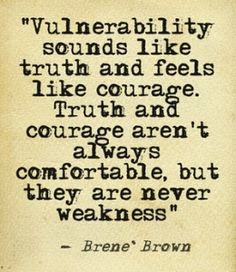
Practicing Vulnerability and Asking for Help


Why is it so difficult to ask for help?  We Americans value independence, persistence, and determination but we are rarely honest about the impact of this value system.  People are praised for seemingly individual achievements when really, none of us can claim success independently.  We achieve long-term goals by cultivating persistence, but we gloss over the moments when we felt defeated.  Determination means you push through adversity, but should it come at the expense of our own self-care?  

Why does asking for help feel like failure?

Maybe it's because we fear being someone's disappointment.  But when we show our struggles to people who care about us, they are compelled to show you theirs.  They want to tell you "You are not alone in this life". Give people the opportunity to support you.  Don't make their decisions for them. Let them decide how to lift you up.  Even Dr. King needed to surround himself with people who built him up when he felt weak. (Selma plug!)

Maybe it's because we don’t want to admit imperfection. Maybe imperfection is a sign of weakness. But if we are more transparent about the struggle, then we can begin to see systemic trends that make life harder for some than others.  (I’m thinking of micro- and macroagressions against women and people of color, the LGBTQ community, parents in the workplace…perhaps you can think of other examples).  How can we advocate for change if we keep suffering in silence?

Maybe it's because vulnerability is uncomfortable. It is definitely difficult to let other people see your cracks. People ask how you are doing and they want to hear that you’re ok and things are good.  They can walk away and remain amazed by your awesomeness.  The problem is, this places the ability to do awesome things squarely on “awesome people.”  You hear an amazing story and think “I could never do anything like that.” When really, we all have the capacity to do amazing things. 

Nobody wants to be a Debbie Downer. But carrying the weight of life around while wearing a smile is exhausting.  When you feel like wallowing for a while, it is isolating and lonely when you don’t know that others before you have also wallowed on their way to success. So be vulnerable with someone today. Choose a person who cares about you, and tell them that you are lonely, joyful, in love, or in pain.  Give people a chance to surprise you. 


*Note: I’ve been reading, thinking, and talking about vulnerability a lot lately, and this book sparked my interest: Brene Brown “The Gifts of Imperfection: Let Go of Who You Think You're Supposed to Be and Embrace Who You Are”

Wednesday, January 7, 2015

Emotional Labor: When it Hurts to do the Work


This month, I have learned about the importance of taking a guilt-free break.  My research is on mental health among Haitians and Dominicans of Haitian descent in the D.R.  I’ve completed almost 60 in-depth interviews with people (a research assistant did 20 interviews).  In addition to questions about perceived discrimination, I have been asking people about depression and anxiety symptoms, coping strategies, and general life stressors.  I guess I shouldn’t have been surprised that this work would have an emotional impact on me, but I was.

I was caught off guard when I started to feel my own feelings.  I mean, can you imagine feeling guilty for feeling guilty? Yeah, I went there…But here is how it started:

First, I felt the pressure and responsibility of being the “only one I’ve ever shared this with”.  Then the urge to help fix the situations that burdened people.  Then inadequate and ill-equipped to listen therapeutically…because I’m not a therapist. Then helpless, when it became clear that a major problem is poverty and I am not equipped to solve poverty in my remaining five months.  Next came the guilt of my own privileged position.  Then I dreaded going to my field site and decided I would never choose a research topic like this again.

I was overwhelmed.  So I started to talk about it.  I reached out to friends and colleagues who have also worked on emotional topics.  I wrote about it.  I read articles about it.  And I started to feel less alone and less guilty.

It also helped me to do “non-academic” things. Many of my respondents used “avoidance coping” – doing other things to take their minds off of daily stressors. (Note: I also felt ridiculous because I was asking them to talk, in depth, about things they would rather avoid thinking about.)  Anyway, avoidance coping is my thing, but I usually use work to cope with personal stressors.  In this case, the work was the stressor.  So I started reading fiction, painting, doing yoga, and watching Netflix.  The work was still there every day, but at least there were moments when I could completely not think about it.

So, this break was a good one.  In hindsight, I would have planned my research design with a break in mind, or maybe small breaks throughout the year to recharge.  Either way, I feel much better after a little distance.  

(Note: If you’re looking for a starting point, Arlie Hochschild and Sheryl Kleinman are sociologists who write about the emotional labor of fieldwork. Also, I bet social workers have good insight on this…)

*photo credit: http://www.liveandlovework.com/2013/09/20/its-break-time/

Friday, December 5, 2014

Pain and the Process of Healing


My research in the D.R. is on how discrimination impacts mental health. I’ve been doing interviews for a few months now and, although it feels like an obvious statement, many things impact mental health. Respondents do talk about discrimination, but they also talk about poverty, job loss, family tensions, marital conflict, and the death of loved ones – things that connect people across the globe as fellow human beings.

In the wake of highly publicized police brutality, the past month has been an emotional one for many of us.  People are deeply wounded and many feel betrayed by a system – a country – that is supposed to protect everyone’s right to life.  There are so many necessary conversations, and I think a conversation about healing is one of them. 

I shared a previous post on the tragic loss of our dear brother. I wrote that I wanted to bring my family back to this place “in search of healing”.  And I’m realizing that maybe healing is not a destination.  Maybe it is a continuum, a constant process.  When I reflect on how far I’ve come, I no longer have nightmares and flashbacks about the day.  I no longer feel broken, like my world was ripped from under my feet.  I no longer feel bitter when someone refers to ocean sounds as “soothing”.  But sometimes, I imagine the most tragic outcome possible when I’m away from loved ones.  And I still have to swallow negative thoughts when I find myself anticipating the worst. And I still have to reign in my fears that joy is only temporary.

A fellow blogger and friend recently wrote about how motherhood changes your body and mind in a way that makes it impossible to be the person you were before.  Not only that, it's an unrealistic expectation to think that you can go back to that person.  That’s how I imagine healing to be.  I will never be who I was before.  Nor should I try to be.  But I’m still healing.  

The point is, it's a process.  We may never know what it looks like to be "healed", and I imagine that there's variation in what people/communities need for their own healing.  I needed to stare my tragedy in the face in order to begin my healing process.  Maybe not everyone needs that.  But I did.

I asked one of my respondents how she copes with sadness when it comes up for her.  She told me that sad feelings are “passengers”, they come and go but they are always there.  My heart broke for her.  Some of us live in a continuous state of sadness, anger, worry, and fear – and have been for years…decades…centuries.  I’m still hurt, sad, angry, and afraid as black lives continue to be lost because of injustice.  But maybe we have to stare the pain in the face before the process can begin. It’s scary, uncomfortable, and difficult.  But maybe it’s one way for healing to begin...and maybe we can begin to see ourselves as fellow human beings sharing this world.  

Wednesday, November 19, 2014

The New Normal – Finding Order in the Chaos Part II


Things are feeling really good here.  The preschooler loves going to school.  The toddler loves daycare. My husband found a part-time job he enjoys. My research couldn’t be going better.  Sometimes, with major life changes, I work myself up over what is to come, then when things are ok, I work myself up in anticipation of difficulties ahead.  So, I thought I’d take a moment to bask in this happy place and share our “new normal” with you.  I wrote about creating a work schedule in a previous post.  It was about our life juggling work and family in the U.S.  Now that we’re in the D.R., we’ve carved out a new routine that works for our family.

Here is our weekday schedule:

6:15-7:15am wake up and get dressed, get the kids dressed, give the kids breakfast, pack school lunches/snacks

7:15am – My partner drives the 4 year old to school on his way to work.  I put the toddler in his stroller and we walk to daycare. It’s a nice, cool, leisurely 5 minute walk where we imitate the sounds we hear (birds, dogs, roosters, and motorcycles)

7:30am – I am back at home. I tidy up from breakfast and check emails.

*I start my work day at 8am and there are two potential work days for me:

Work Day A – at home
8am – 12:30pm  Work from home: writing, reading, organizing the data I’ve collected.
12:30-2pm Go pick up the toddler from daycare, make lunch, lay him down for nap, make lunch for the 4 year old. My partner picks up the 4 year old at 1:15pm on his way in from work.

2-6pm  Continue working. Sometimes I work from home in our bedroom with the door closed to deter noisy children. Other times, I work in the eating area at a nearby grocery store.  The kids nap from 2-4pm. My partner is on duty when they wake up.

Work Day B – at my field site
8am-10am  Work from home: writing, emails, organizing

10am-1pm  Head to my field site. Do 1-2 interviews with people.

1-2pm Have  lunch. Maybe a cup of coffee. Leisurely conversations with people. Check in with my research assistant.  She does interviews in Haitian Creole so we use this time to talk about how things are going. My partner picks up both kids from daycare/preschool, makes them lunch, puts them down for naps.

2:30ish – 5pm  Do 1-2 more interviews. Sit and talk with people.

5-6pm Head home.

6-7pm– Make dinner.  Feed the kids.

7:30-8pm Bedtime routine for the kids: bath, pajamas, story, prayers, song, bed.

8pm-11pm  My partner and shower, eat, watch Hulu or Netflix, check in about our days, go to bed!

Thursday, November 6, 2014

The Post About Poop


We talk about poop so often in this house that I would be remiss not to write a blog post about it. Once I decided it was necessary, I thought “how can I tastefully write about poop so that I can still get a job in the future?” Then I thought, “people on hiring committees poop too, so…I’m just gonna go for it.”  We have been in the country for three months now and things seem to have stabilized for the moment. Here’s our poop story.

Month 1: Diarrhea
We were all adjusting to the food here, but the toddler and I dealt with frequent bouts of diarrhea.  I would venture to say I had diarrhea about 5 out of 7 mornings each week.  The general treatment is to hydrate and get acquainted with the BRAT diet – Bananas, Rice, Applesauce, and Toast.  I got a prescription for Azithromycin from my doctor before I left the U.S., but I never felt bad enough to take it...in retrospect, maybe I should have...ha!

Month 2: Constipation
The pre-schooler has dealt with constipation for about 2 out of 4 years of his life. We brought a vat of Miralax with us and we have definitely needed to use it for our sweet boy.  If we need a re-fill, we can find an equivalent medicine here, or we can have it refilled in the US and ask grandparents to pick it up and mail it to us.

Month 3: Stomach Virus
This month was the worst! The stomach virus that hit our household was ugly.

Bout #1) I woke up in the middle of the night vomiting, then I was out of commission for the entire next day with fatigue and a low fever.  I was convinced I was dying of some rare Caribbean disease, but by day 2 or 3, I was alive again.

Bout #2) First the preschooler fought off diarrhea and vomiting, then it attacked the toddler, then jumped back to the preschooler again!  I was in tears the morning I saw my 4 year old standing at the toilet, vomiting while poop ran down his leg.  We consulted the pediatrician we’ve gotten to know here and she recommended a stool culture to rule out amoebas/parasites/worms if things didn’t get better in a couple of days. But luckily, rest, Pedialyte, and the BRAT diet prevailed, and we all survived.

Friday, October 17, 2014

XYP! Examining Your Privilege


When you were somewhere between 8 and 10 years old, did you ever hear someone shout, “XYZ!!” while pointing at a classmate’s crotch and giggling?  Maybe you were doing the shouting, or maybe you were wearing the offending pants, but the point is that you needed to “examine your zipper” because it was unzipped and your underwear were probably showing.

Well, today, I’m shouting “XYP!”  My time doing research in the Dominican Republic has forced me to examine my privilege.  The thing about the zipper is that you don’t realize you’re unzipped until someone else points it out to you.  I think the same is true for privilege.  You don’t realize your privilege is showing until someone else makes it plain to you.

As a sociologist, I am very familiar with the concept of privilege, and I have not considered myself a “privileged person” in the past.  Many instructors use Peggy McIntosh’s work “White Privilege: Unpacking the Invisible Knapsack” to illustrate the benefits of whiteness that go unnoticed. There are assumed and taken-for-granted beliefs and practices that are associated with privilege of all kinds including race, class, gender, nationality, sexuality, physical ability.

I am a black woman who grew up in a working class family that struggled to make ends meet.  I am very proud of my background, but I have never considered myself a person with privilege…until now.  Being in a developing country and connecting with people here has made me realize that my privilege is showing.  Here’s my list of privileges:

  • “American in the DR” – I have connections through the US Embassy and other organizations that validate my work because I am here as an American scholar at a prestigious American university.  
  • “American woman of a certain social class” – I was sitting at someone’s house in my field site chatting with a woman who was about my age, married, two kids.  She asked me “your husband is not mad that you’re here?”
  • “Not dark-skinned” – There are benefits and drawbacks to being a brown American and not a white American here.  However, being “lightish brown” also matters.  Research has shown that for people of color, there is a penalty for having darker skin (education, wages in the labor market, etc).  This happens in many countries in the world (U.S., India, Latin America). It’s called colorism.
  • Highly educated – On one level, I am literate. Reading and writing comes with its own privilege, but being a scholar is a different level.
  • Money – We still worry about debt and covering bills, but the money we have here has provided a car, an apartment with hot running water and electricity, and the luxury to not worry about how I will feed my kids each day.
  • Able-bodied – I don’t have to think about and plan for whether or not my body will do what I want it to do.
  • Sexuality – I introduced my husband and family to everyone at a couple of churches.  We fit into their schema of what a family looks like: husband, wife, kids. This helped with my community integration.
We move about in pretty homogenous spaces. This means that invisible privilege is likely to remain invisible.  Go somewhere different! Start small: neighborhood, grocery store, mall.  Call each other’s privilege out! Would you let someone walk around with their fly open?? Tell your loved ones when their privilege is showing.  It’s the right thing to do.


Tuesday, September 30, 2014

How to Drive and Survive in the Dominican Republic


We bought a used car to get around during our 10 months in the DR.  The car-buying process deserves its own post, but for this entry, I will attempt to explain to you the rules of the road – or as I like to call it: “How to Drive and Survive in the Dominican Republic”. (Disclaimer: We live in La Romana. Driving in the capital, Santo Domingo, is another beast.)  Data from this post come from my own driving experience and from an interview with my perceptive husband who was brave enough to learn the rules, recite them on every outing, then teach them to me.

Sociologists find that in places and situations that seem random and disorganized, there is often a system of order and mutually understood social norms that are not readily apparent to outsiders.  I have tried to apply this concept as I make sense of driving in the DR.  Here are the things we’ve observed thus far divided into “rules of the road” and “words of wisdom”.

Rules of the Road
1)      Green lights mean go. Unless the electricity is out. Then you just go whenever, easing out until someone has no choice but let you go. When in doubt, just go.  Unless you might cut someone off – then, don’t go.
2)      Red lights mean stop. Unless there are no cars coming in the other direction…and unless you’re on a motorcycle.  Motos create their own rules.
3)      Double yellow lines mean no passing.  Unless the person in front of you is slowing around.
4)      Blow your horn to let people know you’re there.  Unlike in the US where we beep when we’re angry or frustrated, in the DR, a beep means “hey, I’m passing on your left” or “don’t cross this intersection because I’m coming through” or “I see the light’s red, but there’s no one else coming, so GO!”  (Notably, some car horns sound like sirens or alarms and you might not recognize “wee-oo…pause…wee-oo wee-oo” as a car blowing at you, but it could be. Especially when it’s accompanied by flailing arms in your rear-view mirror.)
5)      At intersections, one street always has the right of way.  It’s usually the street without the speed dip. Figure this out quickly.
6)      One way streets are sometimes marked. Don’t try to use motos or parked cars to gauge whether the street is one way.  If someone is flailing their hands and shaking their head pointing in the other direction, you’re probably going down a one-way street.

Words of Wisdom
1)      Don’t daydream or get lost in thought.  Focus on driving and only driving – even if you see two clowns go by on a scooter.
2)      Be aware of all moving things: motorcycles, scooters, people, cars, dogs. They typically don’t move in predictable patterns.
3)      Look for speed bumps and speed dips – which are more like canyons. They will scrape your car…and make a really awful loud noise…causing onlookers to turn and cringe.
4)      Know where a couple of big streets go in case you get lost.
5)      Have car insurance. 
  
*Image credit: http://static.guim.co.uk/sys-images/Environment/Pix/columnists/2013/6/11/1370970125825/MDG--Road-Safety--busy-ro-009.jpg

Friday, September 19, 2014

Confronting the Myth of the “Superwoman”: Hiring Housework Help


In my head, I know that Superwoman is not real.  But if I’m honest, I still felt pretty close to her.  I’m a mom, a wife, a writer, and a full-time graduate student…and I really enjoy all of these roles and (most of) the responsibilities that come along with each of them. I’m ok with not doing all things at 100% capacity at all times, as priorities shift depending on the day.  But whatever life threw at us, my partner and I could handle…until we got acquainted with laundry and cleaning, DR-style.

Here’s the deal. In the U.S., I could throw a load of clothes in the washer, read/write/email, throw them in the dryer and start the next load, read/write/email, repeat.  This could happen once per week or randomly as needed.  That system is not possible here.  Laundry is its own beast which requires focused attention…and sweat.

First, *you* fill the washer with a hose. Add detergent and clothes. They wash for a while, then *you* drain the water out.  Fill the washer with a hose again for the rinse cycle. Drain. Repeat until clothes are not soapy anymore. (Alternative rinse: put clothes in a giant bucket of rinse water.) Put clothes in the “dryer” attached to the washer. (“Dryer” is a misnomer. This is not a dryer. It is a spinner – like the thing at the YMCA that spins your swimsuit.)  Take clothes out and hang them outside on a clothesline where they can dry in the sun.  (If it rains, get your clothes down quickly and hang them all over the house, in front of fans.)

So, I hired someone to clean and do laundry for our family so that my partner and I could focus on the kids and work.  This was a very difficult decision for me and I was (and still am) uncomfortable with it. I am uncomfortable because of both the class and gender implications of this choice.  Because of my own working-class background, I feel some kinda way about having "help". The woman who comes needs the work, she has 6 children. But I am also aware that I am participating in an informal labor system which is unregulated and renders millions of people vulnerable to unfair treatment. 

With regards to gender, I have had to come to terms with the fact that we could not do everything here…more importantly, *I* could not do everything.  I could not keep up with the housework and also focus on my research and spending time with my family.  Now, I’m not hung up on gendered responsibilities, but I still felt like cleaning was my realm, and I still felt like this was a “mom/wife fail”.  In the end, we do what we have to do to make things work for our families.

Superwoman can handle all things, all the time, with grace and a smile.  She can work outside the home, kiss and tickle her clean children with loving patience, and make a healthy dinner while wearing a cute negligĂ©e so that her partner finds her attractive.  If you meet her, please send her the freshly baked, organic, whole grain, gluten-free muffins I’ve baked. They’re delicious.   

Image credit: http://fc09.deviantart.net/fs70/i/2009/354/6/8/superwoman_design_by_cattle6.jpg

Tuesday, September 9, 2014

When Homesickness Sneaks Up on You


I have tried 4 different kinds of milk and none of them taste right.  And it’s not just me.  The toddler won’t drink it either, so I know something’s different about it.  It’s not in my head.

I didn’t expect to be homesick.  I’ve lived here before and I know people…but there’s still a nagging voice that says “Ugh! If I were at home (fill in the blank)”. Last week was a struggle.  What’s interesting is that my schedule is really falling into place. I am in the groove with work. My partner and I have a good pick-up/drop-off system going with the kids. Things look a little more settled at our apartment…well…we bought a rug and some curtains.

Now that the frantic “get settled” frenzy is over, I guess I’ve had time to miss the U.S. I miss how easy it was to phone-a-friend just to check in about their day or my day.  I miss not wondering whether I’m culturally incompetent (“Did I miss something?” is a recurring question). I miss my church. I miss family gatherings.  I’m sure it doesn’t help that the big kid is turning 4 this week and we won’t be with everyone to celebrate.

Anyway, the good thing is that I could name it for what it is and know that it will pass.  So, to get out of this funk, I have decided I need something else to ruminate over.  Before I left, I posted about trying a 30-day meditation challenge (Aligning Mind and Body).  I have to report that I did not stick with it.  BUT, the good thing is, you can always start again!  So, I’ve decided to re-commit to meditation, incorporate exercise into my weekly routine, and I will also start reading “Oprah-like” articles and quotes about gratitude, perseverance, and life challenges.  

What strategies have worked for you?

Saturday, August 23, 2014

House Hunters International: DR Edition


We have been in the Dominican Republic for two and a half weeks now.  In that time, we have lived in 3 different places (4 if you count the fact that we had to change rooms in our hotel).  We rented a temporary, furnished place to stay in for a week while we looked for a permanent apartment.  Truth time: it is impossible to find a place here and move in with a one-week timeline. I was unrealistic.  Here is what it really looked like over the span of 18 days:

Days 1-7: Find abogados (lawyers/real estate people) who can show you a few places.  You find them by telling friends, co-workers, daycare providers, (whoever!) that you’re looking for a place.  Or you can ride around neighborhoods and look for signs that say “se alquila” (for rent).  There is often an abogado’s phone number posted.  They charge one month’s rent for their services. You can ask multiple abogados to show you places, and there’s no negative consequence for working with multiple people. Here are some tips:
  • Have a neighborhood in mind – recommendations from Dominicans and American ex-pats are helpful.
  • Pick a place where you will have neighbors.  A house for rent that is isolated might be a target for petty theft.
  • Electricity and running water are sporadic throughout the country, so ask about these.
  • Location – not too close to a colmado if you prefer quiet (colmados are small corner stores that can be party spots after hours). Not too close to a church if you prefer quiet (evening services may have loud worship services).
  • Furnished or unfurnished - decide what you want or look at both. (We looked at both.)
  • Don’t make a decision under pressure.  We were on a time crunch, but there were a few “nos” and a couple of “maybes”. For all the maybes, we said we’d get back to our abogado the next day.  This gave us time to think – we ended up saying “no” to both the “maybes” for various reasons.
  • Safety is stressed often. We were advised to look for places with metal bars on doors and windows (I think all houses/apartments have bars), and a closed-in place to park the car.
Day 8: Saturday. Congratulations! You’ve found your dream home. Meet with the abogado. Take your passport. Sign the paperwork. Pay 3 months rent (1 month fee for the abogado, 2 months rent as a deposit that you get back when you move out). The abogado then gets the paperwork legalizado (notarized, I think…I’m still not sure). Your next task is to get the electricity turned on. Go to the electricity place and request a solicitud. No idea what this is but it somehow verifies that your apartment is able to be hooked up with electricity. They say come back on Wednesday.

Day 9: Sunday. You negotiate a lower rate to stay until Thursday morning at the temporary place (was $100/night, negotiate to $55/night). You and the owner both know that $100/night was ridiculous.

Day 10-12: Monday-Wednesday. You wait. Shop for furniture to have it delivered Thursday. Apartments do not come with refrigerators or stoves, so you have to buy these things in addition to furniture if your place is unfurnished.

Day 13: Wednesday. Go back to the electricity place. They tell you it’s not ready to be hooked up. Come back Friday.

Day 13-15: Wednesday-Friday. Furniture is delivered. Move out of your temporary place and into a cheap hotel ($43/night). Plead with every person you see in your future neighborhood wearing an “electricity” uniform to hook you up…to no avail.

Day 15: Friday. Go back to the electricity office. Your solicitud was approved. Now you have un contracto (a contract). Your electricity will be hooked up on Monday. Hopes dashed. Notify the cheap hotel that you will be staying until Monday morning.

Day 15-17: Friday-Sunday. Wait. Switch hotel rooms Saturday because of an electricity shortage. Go to the beach because your family needs a fun day.

Day 18: Monday. Move out of your hotel and into your apartment. Hope against all hopes that someone will turn on your electricity. Eureeka! They do! Jump for joy…and buy fans.

Furniture costs (not including dishes, fans, mosquito nets, odds and ends)
Refrigerator – 15,000 pesos, $350
Bed (queen sized) – 14,000 pesos, $325
Kid bed – 5500 pesos, $130
Stove/oven – 9000 pesos, $210
Washing machine – 8000 pesos, $190
Couch – 12,000 pesos, $280
Dining room table and chairs – 7000 pesos, $165
TV – 14,000 pesos, $325
Desk – 3000 pesos, $70

Total = 87,500 pesos, about $2035

Friday, August 1, 2014

Facing Tragedy In Search of Healing


For me, the Dominican Republic is a place of great joy and even greater pain.  Most people think of palm trees, beautiful beaches, and wonderful people when they think of the D.R.  While I do think of all those things, I also have painful flashbacks to the most tragic day of my life.  My brother-in-law drowned while he was visiting my husband and me during our Peace Corps service in the D.R. four years ago. 

I remember the feeling of sheer terror when I heard my husband shouting for help from the ocean.  I could hear the fear in his voice over the sounds of the waves crashing the shore.  I remember seeing him and his brother frantically waving their arms. 

I remember running barefoot through a stretch of palm trees in search of help…and praying. 
I remember praying. 

I remember the burning heartbreak and nauseating grief I felt when I returned to the beach and could not find either of them.  I thought we had lost them both. 

I remember the dizzy combination of relief and guilt I felt when I realized my husband was still alive…but his brother was gone. 

I remember anger.  I remember feeling the most intense anger I’ve ever felt. 
Anger at myself. At the island.  At God. 

These memories swirl around my very being and they can engulf me if I let them. So I bury them.  The more gruesome memories are buried deeper still. 

But I’m going back tomorrow.  We are going back tomorrow…and I wonder what it will feel like.  The anger and guilt have subsided, but the sadness of loss remains.  We are going back for my dissertation research, but we are also going back in search of healing.  Going back means returning to a beautiful island that feels like a second home.  It also means staring a nightmare in the face.  There is so much hurt that it often overshadows the beautiful times we shared in the Dominican Republic.  I don’t want that.  I want there to be more beautiful memories.  Deeper friendships.  More good.  So we’re going back in search of healing and happiness.

Friday, July 25, 2014

Meditation (Day 6/30): Aligning Mind and Body


My mind is completely at odds with my body.  A few days ago, someone asked how the transition period was going and I said it was going well.  She told me I seemed relaxed and I agreed that I was pretty chill about the whole thing.  Later that day, I reassessed to discover that I had headaches, a stiff neck, a sore back and my face was breaking out.  So I decided to commit to 30 days of meditation to even things out.

Disclaimer: I have a hard time with the concept of meditation. I’m an obsessive planner.  I live in the future.  The concept of thinking only of the present is not intuitive for me.  BUT, people who find healthy ways to cope with stress are much happier.  AND, sociological research suggests that men take time for themselves when they are caregivers while women don’t.  I usually like a good Zumba class or a pedicure, but since things are so all over the place, I’ll try meditating for 10 minutes a day.

Here’s why I’m skeptical of meditation:
  •          I don’t have time to sit and do nothing.
  •          It’s impossible for me to think about nothing.
  •          I don’t have a place that is calm and quiet.
  •          It seems like a bunch of hooey.

 Here’s what makes me want to try it anyway:
  •  I need to practice being focused.
  •   My partner gave me a good visual for meditation: imagine you’re on the dock of a river watching your thoughts float by.  You can have thoughts, but don’t engage them. Put your thought in the river, watch it float by, then re-focus on your breathing.
  • I pick the most quiet of the “not quiet” times/places and set an alarm on my phone for 10 minutes. I listen to the sounds (cars driving by, birds, etc), then try to re-focus on my breathing.
  • It could be hooey, but I feel a little better after 5 days.

I’ve tried mornings, afternoons, and evenings. I’ve fallen asleep. I’ve been unable to float my thoughts down the river without engaging them. I’ve been motivated only by the decision to write this post.  Some days go well and some don’t…but I’ve got 24 days left in my 30 day challenge.  Who’s with me?

*photo credit: http://www.huffingtonpost.com/2013/04/15/meditation-made-simple-overcoming-obstacles_n_3072226.html